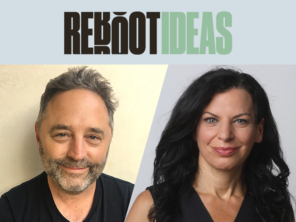

Holding Liat, directed by Brandon Kramer and produced with Reboot Network members Lance Kramer and cinematographer Yoni Brook, follows the family of Israeli-American Liat Atzili after she and her husband Aviv were taken hostage on October 7th, 2023. As Liat’s father Yehuda Beinin works to secure her release, he refuses to let her captivity be used to justify violence in Gaza, exposing deep emotional and political rifts within the family. We asked Kramer and Brook to join us for a Q&A to dig into the film, which was shortlisted for Best Documentary Feature at the 98th Academy Awards and named to the Guardian’s list of best movies of 2025. Holding Liat has sparked urgent conversations across continents, cultures and communities, bringing people together at a moment when many are being pulled apart. This Q&A has been condensed for space. Read the full conversation or watch a recording of the full conversation.
Available now to stream on Apple TV, YouTubeMovies and Kinema and coming soon on Amazon Prime, Google TV and Kanopy. Watch the trailer here.
Tanya Schevitz, Reboot: Thank you both for being here and for having this conversation with us. We really appreciate it.
Lance Kramer, producer, Holding Liat: Yeah, thank you so much for having us. We’re really, really excited and honored to be a part of this conversation.
Tanya Schevitz: Congratulations on the film. So I wanted to start with how this film came about. When did you decide to document the experience of the family?
Lance Kramer: So the film did not exist before October 7th. Unlike some films that might be in development or have some sort of pre-production process, this happened right away in the immediate aftermath of October 7th. As you can imagine, the film was an immediate reaction, but our relationships long preceded October 7th. Brandon, my brother, who’s the director of the film, and I are distant relatives of Yehuda, Chaya (Liat’s mother) and Liat. We met over 20 years ago at (a) wedding and just fell in love with the family. At that wedding, our side of the family grew exponentially by bringing the Beinin-Atzilis into the fold. They were Brandon and my first introduction to Israel. When I first went to Israel over 15 years ago, I stayed on the kibbutz with Yehuda and Chaya. So my experience of Israel for the first time was very colored by their version of it. All of this is to say that we had this relationship prior to October 7th.
After Liat was kidnapped, we reached out to Yehuda just to express our care for the family and ask if there was anything we could do. A few days after October 7th, we spoke on the phone. He was already feeling that their experience as a hostage family was radically different from what was being projected on the news and social media. He was deeply concerned that his daughter and son-in-law’s captivity could be used to justify violence in Gaza, and that their trauma would be weaponized. When Yehuda decided to come to DC, which is where Brandon and I live, to try to activate politicians and special interests, he was remarkably open to beginning to document the family’s experience, not knowing whether it would be a day, a week, a month or a year. They trusted us to bring a camera into the mix. Yoni was the first person we called. I’ve known Yoni for over 10 years, and he’s one of the most talented filmmakers I know. He was the only person we trusted to go on this journey with us.
Tanya Schevitz: Did you know anything about the political conflict within the family before filming?
Lance Kramer: We knew that they, you know, Yehuda and Chaya are older kibbutzniks and came from this socialist tradition, deeply rooted. I had a very limited introduction, but I knew they were very different than the image of Israelis I grew up with from my time in Hebrew school. I also knew Joel’s (Liat’s uncle Joel Beinin) politics from having spent time with him when I lived with him in Oregon. And I knew (Liat’s sister) Tal and I knew how she had been so frustrated with living in Israel and how she wanted to get away from it all. And I knew that everyone felt really strongly about these things, but also didn’t like to talk about them pre-October 7th.
We didn’t know at that point whether Liat and Aviv were alive. We didn’t know, you know, again, like whether this would be something that would be resolved in a day, a week, a year. It was just all unknown. And what we did know was that something very, very historic was happening. It was just, you could feel the weight that this was something that was like cataclysmic.
One of the first scenes that we wound up filming was that conversation, when Yehuda, Tal and Netta are in a circle and they have that kind of argument together. That was one of the very first things that we filmed. And so the dissonance between family members and generations, you know, showed itself very quickly. They were having to navigate each other’s respective emotional and political responses. They were also still staying together as a family, and they were welcoming the camera and weren’t telling the camera to leave. So the combination of all those factors to us was quite rare and, and felt really important to continue following.
Tanya Schevitz: How did you decide which parts of the story needed to stay personal and what needed cinematic distance? Like I noticed that you didn’t see Yehuda cry on camera until Liat is back and I thought that was really interesting. Like, as a parent, I feel like I would just be a sobbing mess on the floor the entire time. But he did say, at some point “We need to maintain our ability to function.” And so I wondered if the fact that we didn’t see him cry until the end when she came back was a conscious decision not to show the emotional moments and to focus the film, sort of, or if holding back the emotion was what allowed him to focus and move forward to put all his energy into getting Liat and her husband home?
Lance Kramer: Yehuda is a very stoic person. I think most of the family members are very stoic. So that doesn’t mean that they’re not feeling, it’s just that the way they show up is with a lot of stoicism. And, I think Yehuda in particular. I mean, you know, his daughter and his son-in-law were…it was not clear whether they would survive. So he was feeling a lot. The feelings were enormous, but he channeled the intensity of his fear and anxiety and passion through his like politics basically, and his advocacy and activism. And also I think that kind of stoicism of holding it together was a way of just plowing through each of these impossible days.
So that’s what we were seeing play out, and we just tried to represent that. It’s not like he was that way on camera and then crying off in the corner. That’s just how he was. And I think what we felt, what we observed was that when he, you know, effectively broke down, in that scene, which is the Shiva, after the funeral for Aviv, it was just such a powerful moment where that kind of wall almost that he had like built up in itself had, you know, just started to collapse. And, it was just a very powerful moment in his journey and in his character and kind of gave a different meaning to the stoicism that you saw earlier, I think.
Yoni Brook, producer and cinematographer, Holding Liat: I think the question you’re asking kind of hits at the core of what makes documentary filmmaking such a strange and interesting, cinematic form in the sense that as Lance is saying, Yehuda is who he is, but what gets represented on film is really like a collaboration principally between Yehuda and Brandon (Kramer), the director of the film, myself, if I’m holding the camera, and the sound recordist. But it’s not as if we had note cards on the wall and said, well, this will be the right time for that to happen. It’s more like an act of, I would say collaboration because whatever gets filmed is not necessarily all of Yehuda’s character or Liat’s character or Tal’s character. It’s just the part that is shared between the film team and those people at that time.
Tanya Schevitz: As we were talking about, you caught these sort of tense and powerful moments in the family, especially at some point between Yehuda and Chaya. They didn’t, they didn’t seem to hold back at all, even with the camera there. And I was wondering, how you were able to get to that level of the fly on the wall. I mean, it’s pretty amazing what you’re capturing, and I was just wondering how. I mean, I know you said you had a 20 year relationship with them, but is that it?
Yoni Brook: So those scenes that you’re describing, between Yehuda and Chaya, were filmed in the middle of the night in Israel where that kibbutz was kind of dislocated, living in temporary housing in a hotel. And those scenes were shot with, like, I was shooting, I was holding the camera and, and Brandon, the director, was doing sound. That was it. There’s no crew, there’s no saying “action.” Brandon and I had been essentially living with them for weeks before that time, often, you know, sleeping in their house when we could. And we didn’t know what was going to happen every night, whether Liat would come home or not, whether they would hear good news or bad news. So Brandon and I just slept on the floor, not of their hotel room, we wanted to give them some privacy. So we slept in the hallway, outside and all the other families on the floor, they were like, “Oh, yeah, those are just the weirdos who sleep on the floor.” We just kind of projected like that was normal and in that, I think the family understood that we were like in it for the long haul.
We weren’t just in it to like sit them down for interviews and ask them how they were feeling. We rarely asked them anything. We just were with them all the time. And so in that way, we were present for a lot of stuff that never made it in the film. We were helping them out with things that never made it in the film. So it didn’t seem that crazy that we were in the room with them when they were having heated arguments because we were mostly in the room with them when they were having banal conversations about what they were gonna watch on TV that night. So we were just there for everything. What ends up in the film is the stuff that works with the narrative arc, but it’s only there because we were there and present for all of the boring stuff.
Tanya Schevitz: It feels like Yehuda was alone in pushing the message of reconciliation and peace along with the drive to get the hostages home. He also seems to feel that doing that is what his daughter would want. What message do you think the film has in putting a focus on that?
Lance Kramer: Well, certainly, in the film there’s more time that’s spent with Yehuda and then also with Liat and their respective desires to not have their trauma, as we were discussing, you know weaponized, used to inflict violence on Palestinians, Israelis, anyone. And if anything, I think this crisis that they found themselves in hardened or just deepened their sense of that value and their empathy and their desire not to seek revenge and to seek reconciliation and healing and connection. I think that that’s actually probably most kind of firmly represented through Liat.
We felt that that was just both the truth of the family’s experience and was not a set of perspectives that was being broadly represented just in this whole hostage crisis, and so it felt really important to give attention. But it wasn’t, as you said, it wasn’t the only like way that people in the family felt and Netta had his own experience having been traumatized. And you get a sense for just how painful his experience was and how he’s fighting with his anger, and how Tal has this desire to be almost apolitical, if one could be that way. And Joey calls for not being on Palestinian land in the first place calling for a ceasefire.
So actually we wanted to validate in a sense, or recognize each person in the family’s experience and point of view, and not say that any one person’s own kind of lived experience was more valid than the others. And in a sense, that kind of representation of almost that kind of kaleidoscopic effect of seeing each person and how they were responding, gave each of their kind of point of views even more power and strength.
It was the actual experience of the family. And it also made it more relatable that we felt this unique power of the film as it materialized was that a lot of different people could watch this story from a lot of different points of view, Jewish and non-Jewish, and probably find someone in the story that they could connect with. And, in this day and age where everything seems to divide and polarize us, to be able to watch a film from all these different points of view and find someone that you might connect with, if not agree with, or relate to, felt like a real step forward.
Tanya Schevitz: How you see the film landing with different audiences?
Lance Kramer: We’ve had over 100 screenings in the last year in, I think now it’s been over 20 countries. So there’s just been a lot of different kinds of people that have seen the film. We felt like part of the role and the responsibility of the film is to go directly into spaces where it’s almost like most feared to have this kind of conversation where people are feeling, you know, most at risk of being pulled apart. And it’s been a beautiful thing to see how the film has been opening up dialogue, getting people to talk, getting people to feel, getting them to connect even when they’re arguing. It felt very constructive. Um, you know, we’ve never had a screening canceled. We’ve been packing houses left and right, whether it’s been at documentary film festivals, Jewish film festivals, regional film festivals, synagogues, colleges. It’s just been a really kind of beautiful thing to see so many different kinds of people connect with this story and wrestle with it too.
Yoni Brook: My take on it is that there’s been a lot of media made about October 7th and everything that’s come after. And I think what the film tries to do is be very intimate and empathetic and nonjudgmental. Again, people have heard maybe too much about Israel Palestine right now, but I think there’s still a yearning for people to connect on the issues and conflicts that people are having internally and externally. And so I think the film is providing another way to do that that doesn’t feel so confrontational.
Tanya Schevitz: You continued to film when Yehuda meets the Palestinian advocate Ahmed Mansour in the halls of congress. Why did you think it was important to include that scene?
Lance Kramer: It was, again, I think one of these moments that, like Yoni said, you can’t kind of script that something like this would happen, but it was kind of this maybe tragic and beautiful thing that, a father whose daughter and son-in-law were kidnapped is in Israel now, has gone thousands of miles from his home to go to DC of all places to try to get some help. And a Palestinian man whose family has been killed in Gaza, more than a dozen people in his family have been killed, is trying to do the same thing to get some help to end that violence in the exact same halls of Congress. And both of them are working the hallway, trying to get some help so that their families can stop suffering, and they happen to bump shoulders. And the fact that it took this Jewish Israeli-American father and a Palestinian to actually wind up having this encounter point in DC in the Capitol, rather than say back there, was just a remarkable occurrence. And you feel the desire to connect, you feel the kind of iciness and also some of the fears that each one of them brings to the table. It’s just very real. Like the tension is palpable, but also the desire to find some sort of common ground is just as palpable. I mean, it’s just a very potent and human moment. And when that scene played out, we didn’t know whether it would be in the film, but we just kept filming, we kept rolling, but then once we were reviewing the footage, it just became very clear that this was a critical moment that would be a part of the story.
Tanya Schevitz: Yeah, it was incredibly powerful. There’s a scene where Liat talks about the humanity of the family she was held by and the connections they made, and says that peace is the only option. What kind of response did you get to that scene and that message?
Lance Kramer: She as a hostage lived this extraordinary contradiction, if you could call it that, where on the one hand, her husband was murdered, her kibbutz was destroyed, she thought that her kids were maybe dead, she lost countless, neighbors and community members and the kibbutz and she also was taken at gunpoint against her will, and then also formed this human bond with the people who took her and felt that in that context of being a captive, she was well taken care of. And she formed a connection and felt deep empathy for the people who held her, and she saw firsthand injustices on the other side of the fence in Gaza and left with greater empathy for Palestinians even than she had had before. And she talks about that at the end of the film, how, she’s kind of grappling with the consequences of indifference. (People) have had to grapple with Liat’s lived experience that didn’t square up with what they expected. And I think all of that is just kind of part of bringing a complicated story into the world.
Tanya Schevitz: Yeah, absolutely. I mean, I think that was so powerful for her to share that. In moments like this, silence is political and Liat’s father refused to be silent. What did you guys refuse to be silent about in shaping this film?
Lance Kramer: I think that the immediate aftermath of October 7th was incredibly, not just painful, but also scary, let’s say on a personal level. And part of the consequence of that fear was silence. Like, I felt scared to say anything on social media or just talk to anyone in my life. I felt myself retreating, like rapidly into a shell. And I quickly realized that if we were going to make this film and embark on this journey to tell a story, again, not knowing what direction it would go, that part of that exercise would be a matter of like recognizing where fear was showing up, and then with our cameras and without our cameras walking towards the fear. And that it was a process of trying to either confront fear where it showed up, like externally or internally, and then kind of going towards it and trying to understand it better, you know, exploring it, unlocking it, whatever the case was. I mean, there was a lot of negative discouragement along the way and people that I guess if we had listened to, the film just wouldn’t exist. But it felt important to, you know, hear that, but also still proceed. And I think that the impact of the film and the way people have responded to it thus far has kind of been like proof positive that that was the right call for us.
Tanya Schevitz: Great. Thank you both so much. This has been so powerful of a conversation. I really appreciate it.
Lance Kramer is a DC-based filmmaker and co-founder of Meridian Hill Pictures. Lance produced Holding Liat (Oscar Shortlisted, Berlinale Documentary Award Winner); The First Step (Tribeca, Afi Docs); City Of Trees (Full Frame, Pbs, Netflix); and The Webby Award-Winning documentary series The Messy Truth. Kramer is an alumni of the Sundance Creative Producers Summit, the Impact Partners Documentary Producers Fellowship, was named to the DOC NYC “40 Under 40” list, is a current Film Independent fellow, and most recently served as an advisor for the Sundance Producers Labs. Kramer was awarded five Individual Arts Fellowships by the DC Commission on the Arts and Humanities over the past two decades. In 2014, Kramer received the DC Mayor’s Arts Award, the highest honor given to working artists in the city. Kramer served two terms as Board Member of Docs in Progress, is a board member of the Foundation for the Augmentation of African-Americans in Film (FAAAF), and has been an active member of the Documentary Producers Alliance (DPA) since 2016. Kramer holds a bachelor’s degree in history and film from Dartmouth College.
Yoni Brook is a Peabody Award-winning filmmaker whose films premiere at the Sundance, Berlin, New York and Toronto film festivals. Brook co-produced, co-directed and lensed the docuseries Philly D.A., called “the second coming of The Wire in docuseries form” by New York magazine. The series premiered at Sundance, was the first series to screen at the Berlinale and was broadcast on PBS Independent Lens/Topic and BBC Storyville. His credits as a producer and DoP include Holding Liat (Berlinale Documentary Award, Oscar Shortlist, Tribeca), The Oldest Person In The World (Sundance), The Price Of Milk (Tribeca), 32 Sounds (Sundance, Oscar Shortlist), Menashe (A24, Sundance) And Valley Of Saints (Sundance World Dramatic Audience Award Winner). Brook’s Directorial Debut, A Son’s Sacrifice (IDFA), won Best Documentary Short at the Tribeca Film Festival and the IDA Documentary Awards. Brook is an alumnus of New York University’s Tisch School of the Arts, CPB/PBS Producers Academy at WGBH, Berlinale Talents, and was the George Stoney Fellow at the Flaherty Seminar. He has served as a visiting professor in the Department of Film and Media Studies at Swarthmore College.
*Reboot Network members Ari Handel and Libby Lenkinski were additional producers on the film.