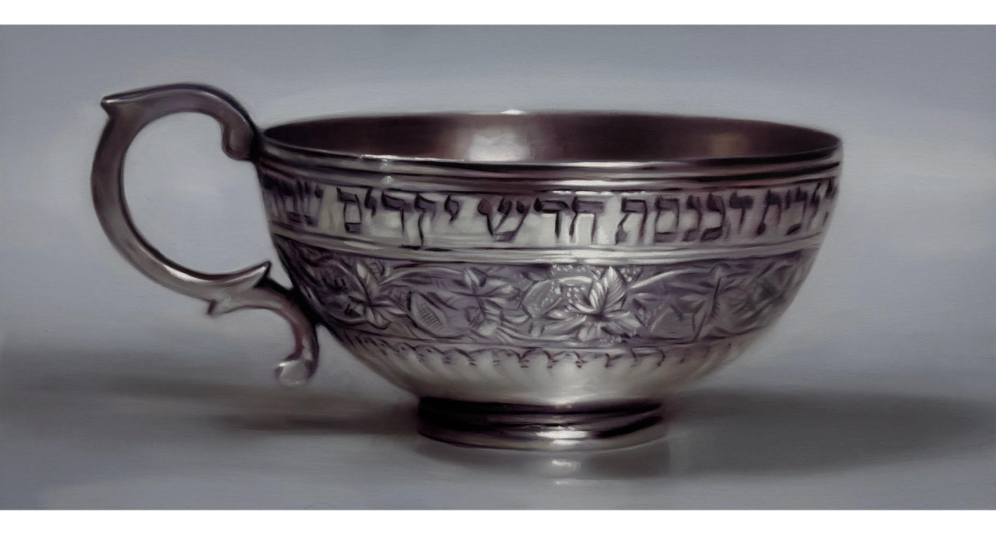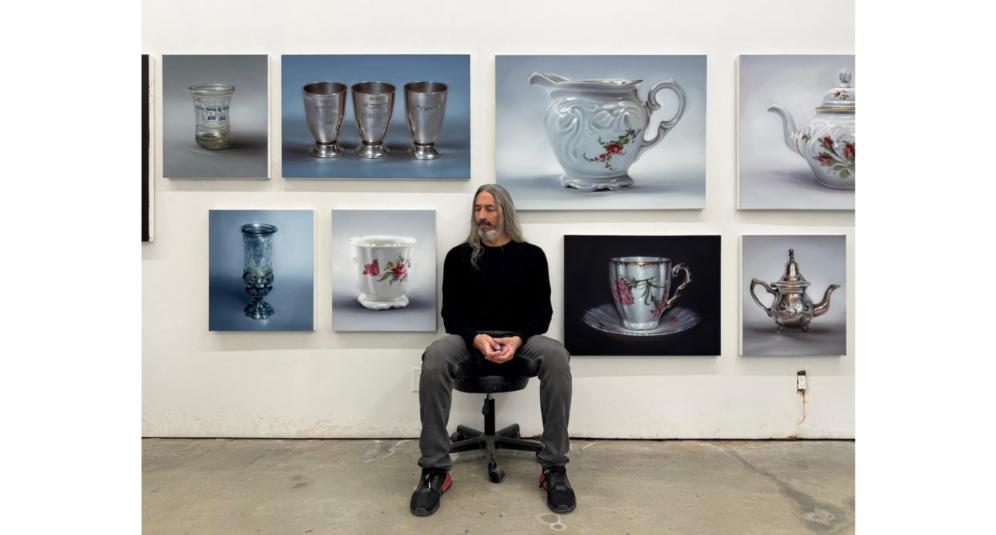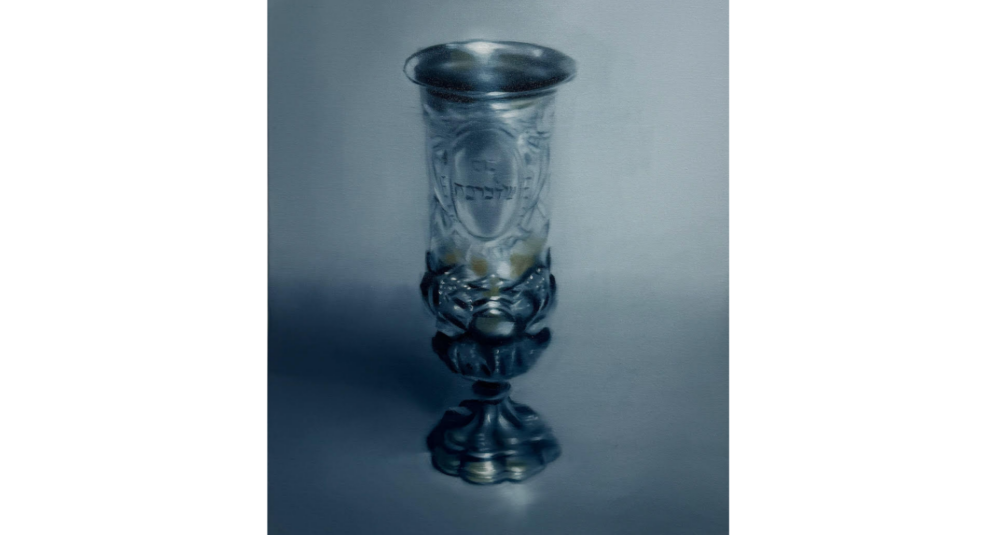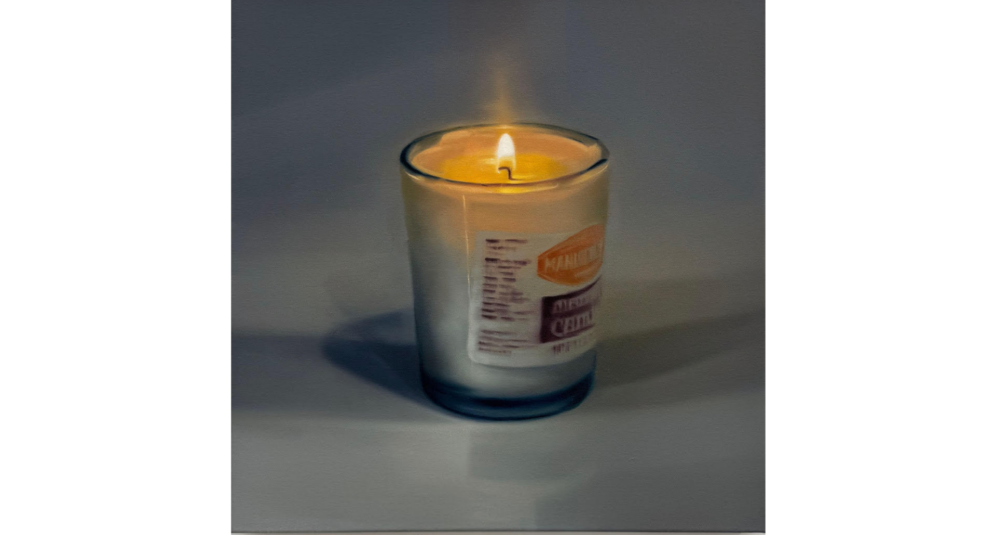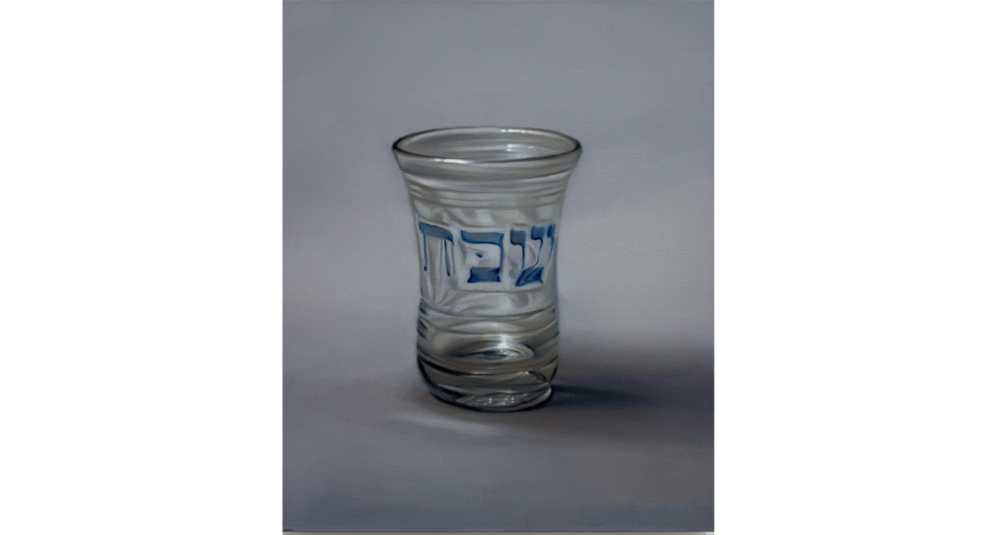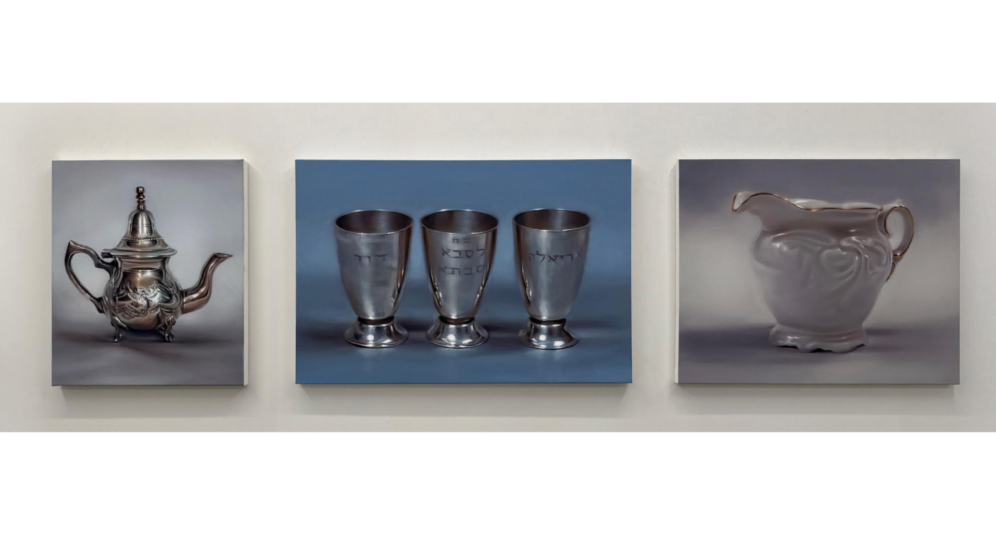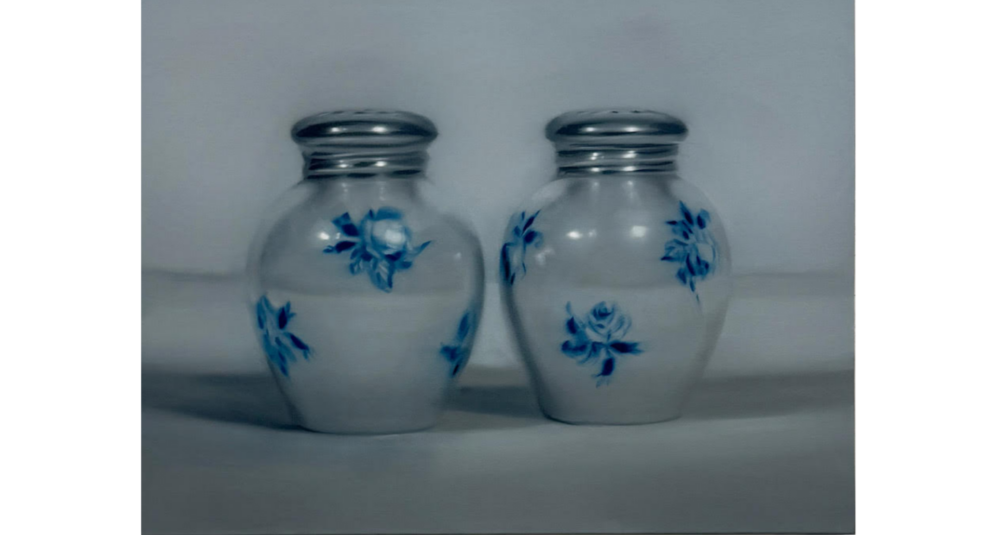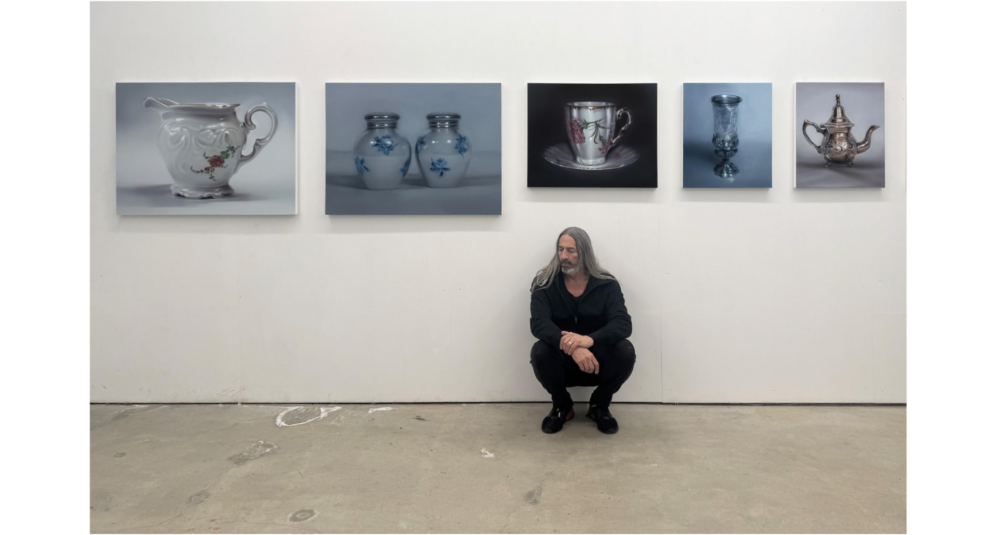

In my recent bodies of work, I have been exploring the remnants of displaced histories—objects that exist as evidence of destruction, displacement and exile. The paintings in my most recent series which runs through May 10 at Anat Ebgi Gallery in LA, are still life paintings of Judaica from the now Muslim world. They depict artifacts that belonged to Jewish communities in places like Iran, Iraq, Yemen, Turkey, and Syria – communities that have been eliminated or nearly eliminated.
Though these objects come from vastly different contexts, they share an unsettling commonality of being orphaned from their original purpose. My paintings are an act of restoration—not to return these objects to their original use, which is impossible, but to complete them, acknowledge their incompleteness and their violence and, in doing so, perhaps to sanctify them.
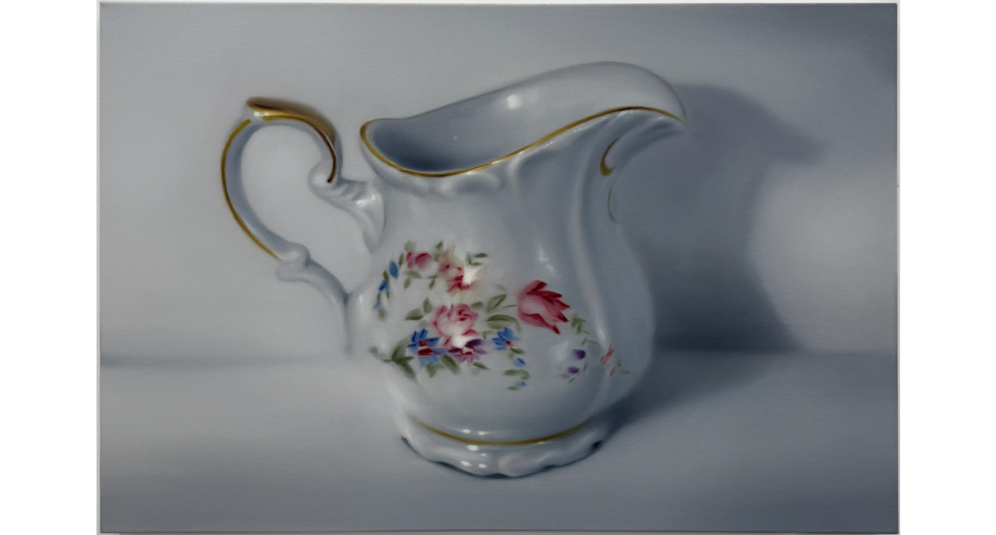
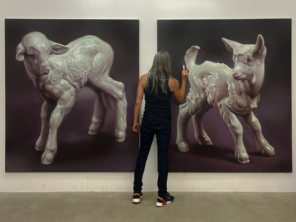
My previous body of work focused on porcelain figurines produced by Porzellan Manufaktur Allach, a German porcelain factory founded by Heinrich Himmler in 1935 to produce tchotchkes for the Nazi elite. The factory was soon moved to Dachau, where Jewish prisoners and other forced laborers were made to work on these objects. The Allach porcelain pieces are creepy. They appear delicate and refined and grotesquely cutesy. But their apparent charm is inseparable from the conditions of their creation. Founded by Himmler, Allach was an ideological project, a factory dedicated to producing objects that reinforced the Nazi aesthetic. Production was soon moved to Dachau, where jews and others were made to work on these porcelains. Each object that survived from Allach’s production is a paradox: an object meant to symbolize purity and culture, created through unimaginable suffering and coercion. I created enormous still life paintings of these porcelains to engage with this contradiction directly. I wanted to make these paintings beautiful to honor the conditions of their making and to somehow redeem them.
In contrast, my newest still life paintings of Judaica from the now Muslim world explores a different kind of loss. These objects were once part of thriving Jewish communities that no longer exist in their original context. These ritual objects were once embedded in Jewish life, yet they have been orphaned. Unlike the Allach porcelains, these objects were not created in a context of violence, but they are marked by displacement. Their absence from the places they once belonged tells a story of erasure and adaptation. By painting these objects, I seek, again, to reanimate and to sanctify them.
At the core of these recent bodies of work is my ongoing exploration of dematerialization and sanctification through still life painting. Abraham Joshua Heschel writes about the sanctification of time rather than space—about holiness not as a fixed location, but as something that exists in the marking of moments in time. Painting these objects is a way of engaging with this idea. I’m not trying to create precise replicas of the objects I depict, but rather to allow them to dissolve and reconstitute through the act of painting. I filter these objects through my investment of time and through my body. In this way, I approach the idea that human creation—whether it be a challah, a painting, or a ritual object—participates in a sacred act of making and remaking the world. These works are not about nostalgia or preservation but an effort to complete what is unfinished and making something new out of that.
Read about Russell’s other recent exhibitions:
The Demon Behind the Deer: “Porzellan Manufaktur Allach”
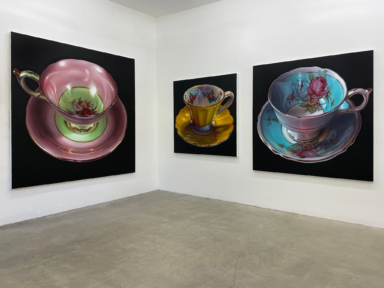
Painting as an Act of Faith – “Teacups”
About the author
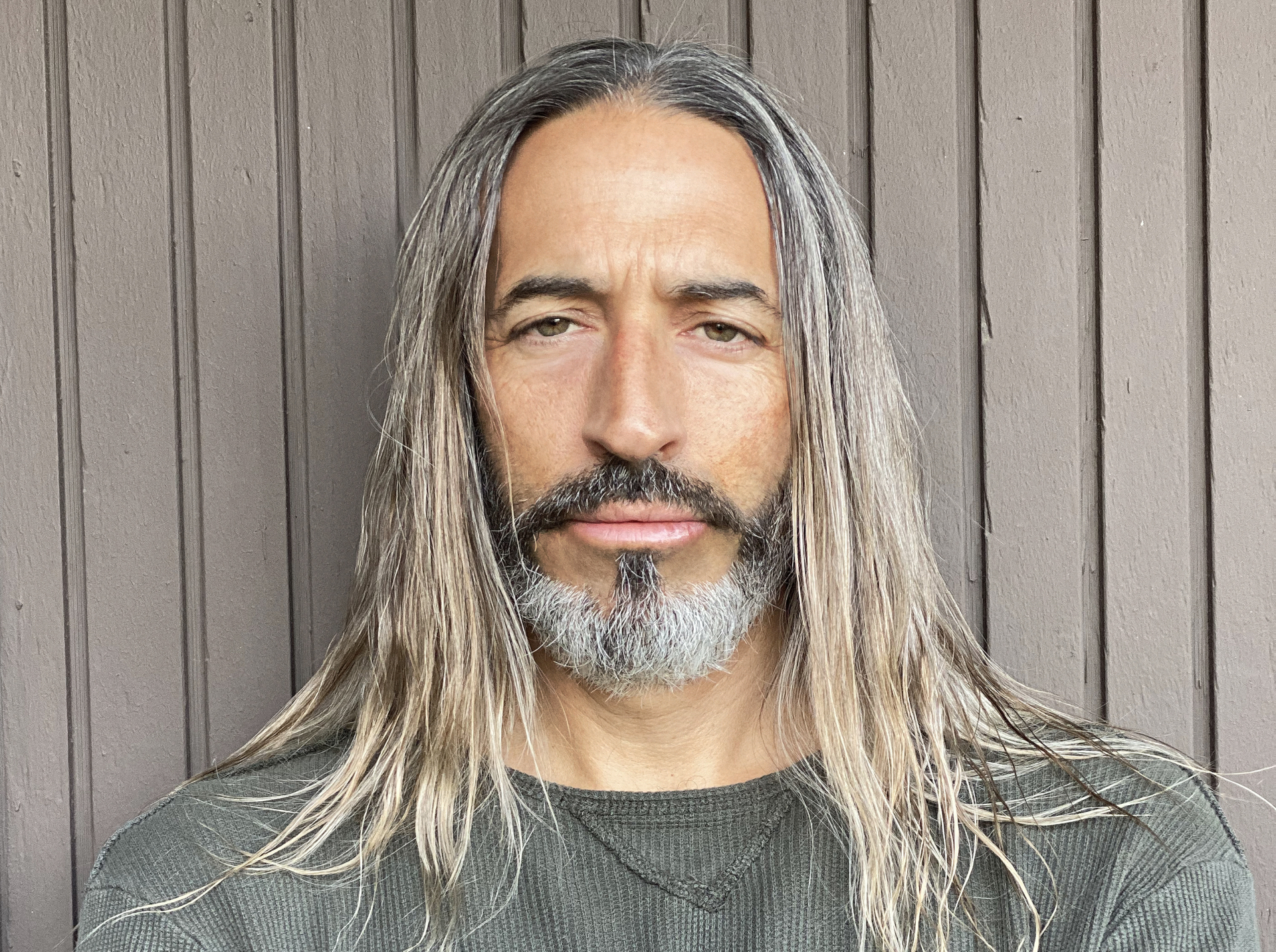
Robert Russell
Artist
Robert Russell (born 1971) lives and works in Los Angeles, California. He completed his MFA at The California Institute of the Arts (CalArts) in 2006. Russell earned a BFA from the Rhode Island School of Design. Through the use of a frequently subdued color palette, Robert Russell’s representational paintings explore concepts of identity, memory, desire and authenticity. Often self-referential in nature, existential questions regarding the role of an image and the process of memory and imagination arise. Themes include (among others) art books, portraits of Robert Russell that are not the artist, clouds, pigs, children and most recently teacups. With his most recent exhibition Teacups, Russell both holds on to his past and expands on it. His previous two exhibitions “Book Paintings and Revisits” explored the visual tropes of the artist monograph and continued his conceptual interest in authority, authenticity, and iconography. Recent solo exhibitions include Miles McEnery Gallery, Anat Ebgi Gallery, The Cabin LA, LA><ART (Los Angeles), François Ghebaly Gallery (LA), Osmos (New York, NY) and Burrard Arts Foundation (Vancouver, BC Canada) where he was also an artist in residence. He has been included in numerous group shows in Los Angeles including Roberts and Tilton Gallery, Material Press MOCA LA and M+B Gallery.