The Stories We Carry: Matthew Shear on Jewish Identity and Fantasy Life
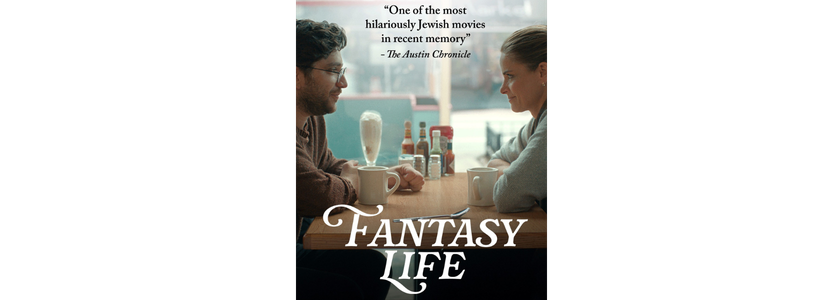
Noam Dromi, managing director of Reboot Studios spoke with filmmaker and actor Matthew Shear about his new film Fantasy Life. What interested us at Reboot is that Shear isn’t using Jewish identity as a premise or a plot device, but as a lived cultural environment that shapes how these characters think, joke and relate to each other. The film’s Jewishness feels deeply lived-in. It’s not an “issue film” in the traditional sense, but something more intimate and textured, rooted in a cultural sensibility many people will recognize: the humor, the neurosis, the searching for meaning and the complicated inheritance of history.
The story touches on themes of identity, intergenerational memory, assimilation and the sometimes uncomfortable ways we relate to our own backgrounds. But it does so through characters who feel very human, funny, flawed and deeply self-aware.
At Reboot, we’re always interested in how culture reflects the evolving story of Jewish life, and Fantasy Life is a wonderful example of that. It explores Jewish identity not as a headline, but as something embedded in everyday experience.
Read more to learn through our conversation with Shear about the making of the film, the ideas behind it and the cultural questions it raises. Watch a recording of the Q&A.
Fantasy Life is playing in NYC and opens nationwide April 3. Buy tickets or enter for free tickets through ticket giveaways in NYC and across the country.
Q&A with Fantasy Life Filmmaker Matthew Shear
Noam Dromi: I’d love to hear a little bit about the spark for the film, and whether there was a specific moment, memory, or relationship that first pushed you to write this particular story.
Matthew Shear: So, the spark for the film is … I was working, or rather, not working, as an actor, and getting frustrated … I needed another way to express my creative energy. And my wife kind of witnessed me floundering and suggested I write something. And I started writing Fantasy Life in 2018, and it was truly like an opening. I just kind of fell in, and the issues you brought up, they sort of started to emerge unconsciously. A lot of the threads, like the Jewish bent in the film, really are just a natural extension of me and what I was going through.
Noam Dromi: Even though I get that maybe the totality of the film is not autobiographical, was the emotional landscape autobiographical? I think I remember reading that you were a Manny in New York at some point?
Matthew Shear: I would say that a lot of the story is. I wouldn’t say it’s true, but it is personal. So all of the characters and all of the situations are drawn from my life in some capacity. They’re often, like, flipped on their heads and, you know, taken in a different direction than what happened to me. But, yes, the sort of feeling of the film being personal and an extension of my experience, I would say that’s accurate. I was a manny for families, you know, non-actors, actually, that was invented. Mostly earlier in my career, I was working for a few different families (in New York), and it was a good way to kind of have a somewhat normal job while auditioning and getting a part here and there. And yeah, I definitely learned the hard way how to deal with kids, and, you know, connect with them, and get into difficult situations with them, where you feel out of control, and you know, they’re the boss of you.
Noam Dromi: So I’m curious, when you started writing, did you set out to make a Jewish film, or did the Jewish identity of the characters shape as the world, sort of came alive?
Matthew Shear: I didn’t set out to make a Jewish film. It kept coming up. You know, it’s just a part of who I am, you know, a part of myself that I really value, and you know, it just is within reach for me, and so I kept kind of finding these characters in a milieu that has a kind of Jewishness to it.
Noam Dromi: I think a little bit about that scene where your character sort of admits to his internalized anti-Semitism and talks about his experience seeing religious Jews, and sort of his visceral reaction to that, and he also talks about, sort of, secular Jews, and the thoughts that that raises in that context as well. So, I’m just interested, because what felt very Jewish about this, and I think is very true even to the work that we at Reboot do, is that it felt Jewish culturally, but not Jewish religiously. Talk about how you navigate that in relation to characters, and frankly, even in your own life.
Matthew Shear: I think that’s generally the lens that I’m looking through, although, you know, I think, like, the religious aspect of Judaism is not exactly something you can kind of scientifically remove from the general experience of it. Not to say that I’m particularly religious, but, like, that it is embedded in the thing. In terms of that scene, that is a good example of, like me as a writer being drawn to exploring something very dark, and funny, and a little, sort of, taboo, and through the experience of this character having obsessive-compulsive disorder. And, like many other parts of this film, my being Jewish kind of informed the way that I wanted to tell that story and have it be complicated and funny and intense.
Noam Dromi: How important are intergenerational dynamics to the film? You’ve got this great mix and amazing character actors, Judd Hirsch, Andrea Martin, Bob Balaban. So talk a little bit about that idea, both in the film and in your own life. How important are intergenerational dynamics to that family and to your own experience as well?
Matthew Shear: This is going to become a refrain, but, I didn’t really mean to write an intergenerational story. It just kind of happened by taking the family that, you know, my character, Sam, is babysitting seriously, and really trying to explore all of the facets of that family’s life, which ended up including parents, grandparents, in-laws. It just sort of expanded, and that ended up being one of the most satisfying parts of the whole process. We had, like a 6-year-old and Judd Hirsch is 90, and so there were scenes where we were all together, and yeah, it was just an amazing experience, as director, to be able to kind of try and hold all of those kinds of characters and ages. In terms of my life, you know, I have two young kids, and they have grandparents. I think one of the reasons I was able to access the Judd Hirsch, Bob Balaban, Andrea Martin generation as a writer was that my parents are a little older and had my brother and myself a little older. The way they talk, and their friends talk, that was what I used to sort of.
Noam Dromi: In reviewing the press notes, I took note of a particular phrase when you talked about the family. You referenced that they lived in a kind of post-war American Jewish fantasy. We’re talking about this film at a very interesting time in the spectrum of Jewish identity in the West and in America today. What happens to Jewish identity when the struggle is over and you’re living the dream that previous generations hoped for?
Matthew Shear: I think that’s part of what I was exploring within myself in this story. My Grandparents on my mom’s side escaped Belgium during World War II by the skin of their teeth. I’m taking stock of what I’ve been given by the incredible struggles of my ancestors, the various places, my family has lived, and now I’m in New York pursuing a creative life, and I have a family, and it’s a question of, like, what do I have that was being sought, by the family that came before me. And in the movie, you really get to see, like, the characters confront their fantasies about themselves and the reality of what it means to fall short in certain areas of their lives, and to be held by their family. And I think that that’s an experience that is not easily compared to what their ancestors went through.
Noam Dromi: What do you hope for your kids in relation to their Jewishness?
Matthew Shear: I hope that they are able to access what I feel I’ve accessed, which is a sensibility, a kind of language, not Yiddish or anything like that, but, like, you know, just a way of orienting towards the world that has humor embedded in it, and a kind of wisdom. I do feel like I have that from the legacy of the Jews that came before us.
Noam Dromi: I want to get back to the internalized anti-Semitism stuff, because like you said, it was an opportunity for you as a writer to explore something deep, not necessarily your own experience, but the character’s experience. I imagine people could look at the key scene in your film and think it is antisemitic. And I’m wondering, just speaking as a storyteller and a filmmaker, was the point how it subtly permeates the other characters in the stories as well, Diane, David, everyone, or was there a reason that it was just said it related to Sam, and then it wasn’t something you felt like you needed to revisit?
Matthew Shear: I guess the first thing to say is that just in the way that I wrote it, it didn’t come back into the story because that scene, it’s important. And why I think it really is effective is that it—and this is using the word trauma lightly—in a kind of traumatic way gets you inside of a character’s head, in an unexpected and somewhat unsettling way. In terms of the way the story unfolds, I thought that was a very useful way to launch him into this journey as a caretaker and as a person, sort of, like, insider, outsider, family member, of this new family, and you’re always kind of a little bit on edge about what’s going to happen to this guy with these kids, and this mother, and, like, what are the blurred lines? Is there something really wrong with this guy, or can you relate to him? You know, it kind of gave it an engine, and to bring it back might have diffused that.
Noam Dromi: What filmmakers and comedians have influenced your work?
Matthew Shear: On the kind of, like, Jewish end of the spectrum. I would say more than anybody, really, just in terms of, like, my early childhood relationship to Jewish humor, was Mel Brooks. You know, like, I was just a major Mel Brooks fan, am a major Mel Brooks fan. Just that kind of Jewish cadence and the way that he tells jokes, I think has, you know, stuck with me.
Noam Dromi: How have audiences responded? Have you experienced, kind of, the difference between viewing it with a mostly Jewish versus non-Jewish audience? Has that come up?
Matthew Shear: Well, what I’ll say is that it played very well at the Nantucket Film Festival, so I think that, you know, is probably the least Jewish audience you’ll get. I’ve found that happily the movie plays well in general, at least in terms of people laughing. I think there are definitely deep cuts that a Jewish audience might enjoy, but I haven’t been horrified by an audience.
Noam Dromi: What do you want people to take away from the film?
Matthew Shear: I think what I would like is if people connect with the characters, maybe relate to them, go on their journey of a life that is not necessarily the one that you want or maybe there are aspects of it that you want. That they land in a place that is kind of just where they are, and that you feel for them.
*This interview has been edited and condensed for length and clarity.